AI Chatbot Development & Knowledge Assistants
Turn Conversations Into Better Experiences.
Custom AI chatbots that understand questions, retrieve relevant information, and deliver helpful, context-aware responses — aligned with your business, brand, and knowledge.
I design and build AI chatbots tailored to specific business needs, from customer-facing assistants that help people explore products to knowledge assistants that make specialized information easier to access.
By combining conversational AI, structured knowledge, and carefully designed instructions, I create experiences that go beyond generic, one-size-fits-all chatbots.
The goal is to make information easier to access, conversations more useful, and digital experiences more engaging.
More Than a Chat Window
A useful AI chatbot does more than generate text. It understands what users are asking, draws on relevant information, and helps them find the answers or guidance they need.
Whether it supports customers, helps visitors discover products, or provides access to specialized knowledge, a well-designed chatbot should serve a clear purpose and deliver meaningful value.
Every solution starts with understanding the use case, the people who will use it, and the information the chatbot needs to provide relevant responses.
What I Build
How I Build Useful AI Chatbots
Connect the chatbot to relevant business content, product information, documentation, or specialist resources. Where appropriate, retrieval-augmented generation (RAG) allows it to retrieve relevant information from a knowledge base before generating a response.
Design conversational logic that considers the current question and relevant conversation history, helping the chatbot maintain continuity across follow-up questions and provide more relevant responses.
Define the chatbot's role, scope, tone, and response boundaries. Carefully designed instructions and testing help keep conversations focused and encourage appropriate handling of unsupported or off-topic requests.
Connect the chatbot to the necessary platforms and data sources. Where information is restricted, access permissions must be enforced so users can retrieve only the content they are authorized to see.
Test realistic conversations, follow-up questions, edge cases, and situations where the chatbot should ask for clarification or hand the conversation to a human.
The objective is to create a chatbot that is not only useful in ideal scenarios but also better equipped to handle real-world interactions.
How an AI Chatbot Works
A user asks a question in natural language. The chatbot interprets the request and identifies the information or assistance needed.
When necessary, the system searches connected knowledge sources to find information relevant to the question.
The AI uses the question and relevant context to formulate a response that fits the chatbot's purpose and instructions.
The chatbot provides an answer, asks for clarification, or directs the user to human support when appropriate.
The result is a conversational experience designed around useful information, clear boundaries, and the needs of its users.
Technology & Capabilities
The Right Technology for the Right Use Case
Every chatbot has different requirements. The technology and architecture depend on the information involved, the expected conversations, and the systems that need to be connected. Depending on the project, the implementation may include:
For natural-language understanding and response generation.
For answering questions using relevant external knowledge.
For retrieving relevant information from larger collections of content.
For connecting the chatbot to other applications and services.
For managing conversational steps, integrations, and supporting processes.
For deploying conversational experiences across supported channels.
For defining boundaries, protecting restricted information, and validating response quality.
Selected Projects

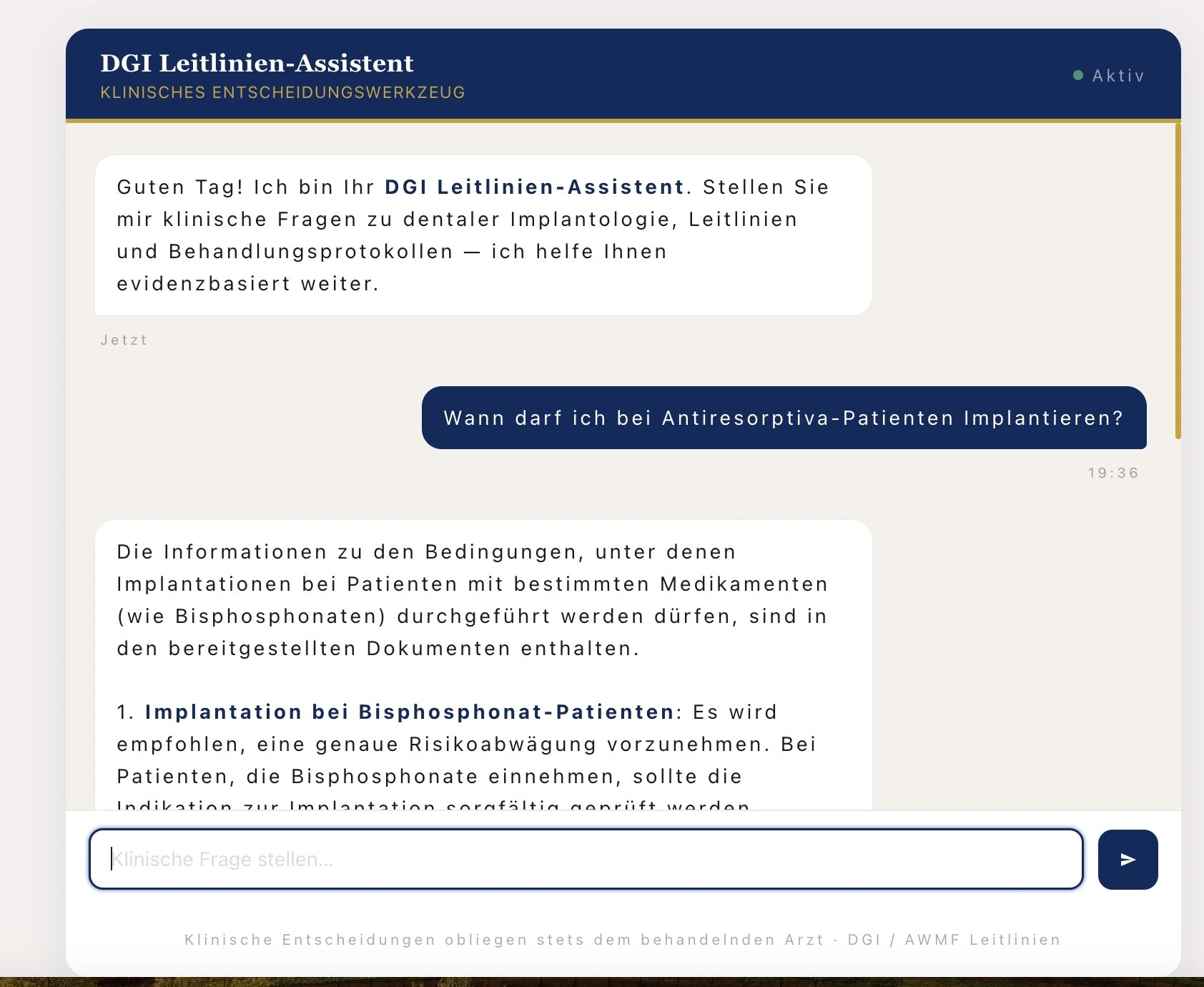
My Approach: Practical AI, Built Around Your Needs
I believe a useful AI chatbot starts with a clear purpose, reliable information, and a thoughtful user experience.
My approach begins with understanding the problem the chatbot should solve, the people who will use it, and the knowledge or systems it needs to access.
From there, I design and implement the conversational experience, connect the necessary data sources and integrations, and test how it behaves across realistic scenarios.
The goal is not simply to add AI to a website. It is to build a conversational tool that makes information more accessible and interactions more useful.
Let's Build a Chatbot That Knows Your Business.
Have a knowledge base to make more accessible, a customer experience to improve, or an idea for a conversational AI assistant?
Let's explore how a custom AI chatbot could support your business and create a more useful experience for your users.